Sleep is a changing pattern, not a timer
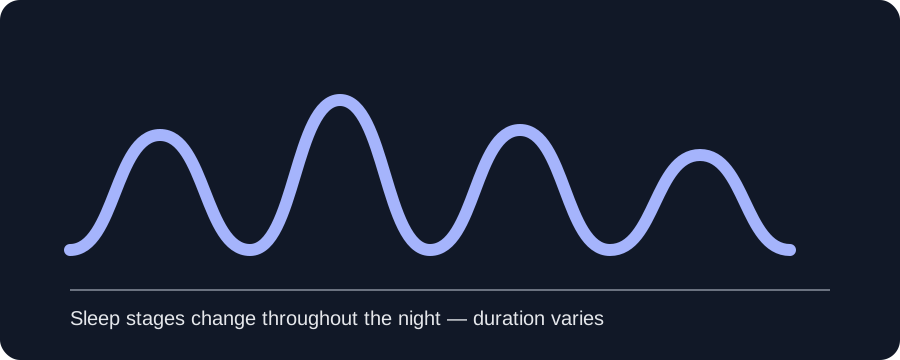
During a typical night, the brain moves through repeating patterns of non-REM and REM sleep. A cycle is often described as lasting around 90 minutes, which makes the number a useful teaching estimate. It is not a fixed appointment: cycle length and stage distribution can differ between people, between nights, and even at different points in the same night. Sleep also changes with age, health, medication, stress, and how much rest someone has recently had.
Why people talk about waking between cycles
Some people feel more alert when they wake from lighter sleep than when they are interrupted during deeper sleep. A sleep-cycle calculator turns that idea into a simple planning aid by counting backward from a chosen wake time or forward from a planned bedtime. SleepPulse starts with an approximate 90-minute cycle and a 15-minute sleep-onset allowance; both are adjustable assumptions in the calculator. They cannot observe your sleep stages or predict exactly when your body will enter them. Those values make the arithmetic clear, but they cannot observe your sleep stages or predict exactly when your body will enter them.
Use the suggestions as a range of possible bedtimes, not as a promise that a particular alarm will feel better. If you have a fixed morning commitment, keeping a consistent wake time and leaving adequate time for sleep are more practical starting points than trying to land on a mathematically perfect minute. When you are tired, do not delay sleep solely to wait for a calculated cycle boundary.
A useful way to apply the estimate
Choose the bedtime or wake time that fits your real schedule, then consider whether the result allows enough sleep for your age and circumstances. Keep the bedroom comfortable, dim bright light as bedtime approaches, and give yourself a repeatable wind-down routine. If you track sleep, treat wearable stage estimates as approximate too; consumer devices do not directly measure brain activity in the way a sleep laboratory does.
The calculator is for general education and scheduling only. Persistent insomnia, severe daytime sleepiness, loud snoring with pauses in breathing, or other concerning symptoms deserve discussion with a qualified health professional. Sleep cycles are one part of sleep health, not a substitute for regular, sufficient rest or individualized medical advice.
Put the estimate in context
A useful experiment is to compare how different realistic bedtimes feel over several days while keeping the wake time steady. One night cannot confirm a pattern, and a cycle calculation cannot identify sleep stages. If schedule estimates increase worry, set the tool aside and focus on a comfortable, sufficient sleep opportunity instead.